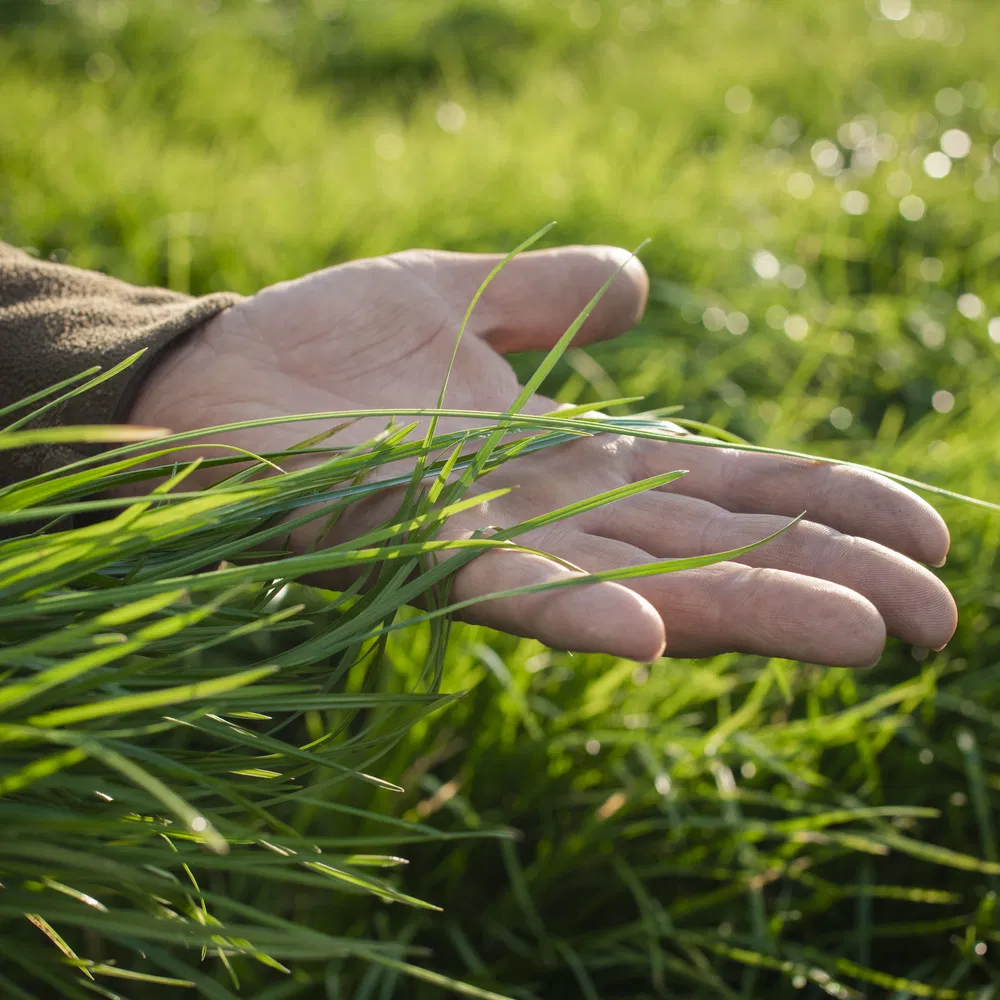
Does the quality of milk protein only begin at the production plant? In reality, the ingredient’s story starts much earlier – on the pasture. How the milk is obtained, how the animals are kept, how farms are controlled and the quality of the raw milk form the foundation of the production process that follows.
New Zealand is a good example, with a dairy system based on natural pastures. This is where the milk comes from that the Tatua Co-operative Dairy Company uses to make its speciality dairy ingredients, including lactoferrin.
Grass-Fed – what does it actually mean?
Grass-Fed is not just a fashionable slogan that brings green pastures to mind. At Tatua, the system is certified to the New Zealand Dairy Grass-Fed Administrative Standard. This means that milk is produced under defined requirements for cow nutrition and pasture use.
This closeness to nature is one of the hallmarks of the New Zealand dairy model.
Why is New Zealand so well suited to pasture farming?
New Zealand’s conditions favour a grazing-based system. A mild climate and access to natural pastures allow cows to eat fresh grass for most of the year. Cows on the farms that supply milk to Tatua graze on pasture all year round.
But a pasture alone does not guarantee quality. What really matters is how the whole system is managed.
That is why Tatua runs its Tatua 360 programme, which covers standards for animal welfare, environmental protection, farm management and milk quality, among others. Every farm in the programme must meet set requirements, and the approach also calls for continuous improvement of farming practices.
At the same time, Tatua applies control systems across the entire production process, and the plant operates to FSSC 22000 and HACCP standards, among others. The manufacturer also has an ISO 17025 laboratory.
Protein quality starts with milk quality
For speciality dairy ingredients, a consistent raw material is especially important. The lactoferrin manufacturer works with a limited group of farms located right next to the plant. The farms supplying milk for lactoferrin production lie within just 12 km of the Tatua plant.
Such a short supply chain has practical benefits. It makes it easier to control the origin of the raw material, ensure traceability and keep milk quality consistent. Tatua stresses that the proximity of the farms to the plant maintains a close link between the pasture, milk collection, processing and the final ingredient.
This is an important perspective for milk proteins too. An ingredient’s quality is not determined by a single parameter but by the entire chain – from the farm, through milk collection and transport, to processing technology and control of the finished product.
Sustainable production is part of quality
Lactoferrin is an example of an ingredient where preserving the properties of the natural protein is especially important. Tatua lactoferrin is obtained from fresh New Zealand milk and then freeze-dried. This process preserves the protein’s native structure and functional properties.
Today’s approach to raw material quality increasingly includes how the raw material is obtained. Tatua takes a broad view of sustainability – as a combination of environmental, social and business responsibility. Among other things, the company works to reduce the impact of production on soil, water, energy and emissions, and supports farms in improving their environmental practices.
So it is not only about the cow being on a green pasture. It is about the whole system: responsible land management, animal welfare, farm control, milk traceability, an efficient supply chain and rigorous control of the production process.
The story of quality begins on a green pasture
Grass-Fed can therefore be seen not as a single product feature but as part of a larger production system. For the milk Tatua uses to make its speciality ingredients, what counts is the pasture-based farming model as well as the proximity of the farms, raw material control and the standards applied at each stage of processing.
It is the combination of these elements that lets us see milk proteins not only through their laboratory parameters but also through the story of the raw material they are made from.
Because before a milk protein makes it into a modern formulation, it first has to start out as part of good-quality milk. And that story begins on a green pasture.